Reviews
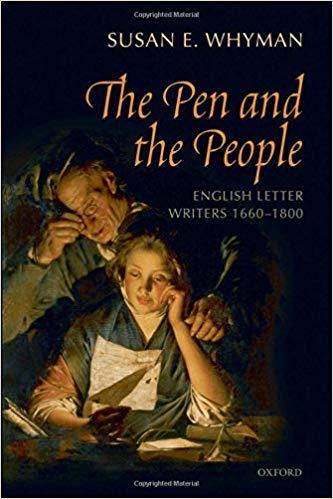
The Pen and the People
Penelope J. Corfield, University of London,
This path-breaking study, written with verve and learning, shows convincingly that Georgian England’s new postal services encouraged an expansive culture of letter-writing among both rich and poor—with improved communications then, as today, heralding wider social changes.
John Barnard, University of Leeds,
This is an important and ground-breaking book. Dr. Whyman’s research, largely drawn from the underused resources of local record offices, radically extends the body of evidence for exploring the uses and effects of literacy in the long eighteenth century into the working and middling classes.”
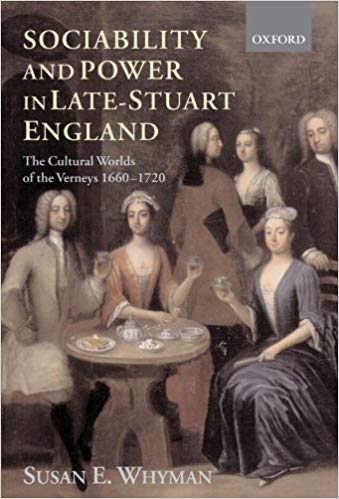
Sociability and Power
Steve Hindle, University of Warwick, Social History, vol. 26 (2001), 346-48.
A wonderful archive is not itself sufficient to create a book as engaging and rewarding as Sociability and Power. Through Susan Whyman’s archival industry, methodological subtlety, and historical imagination, the silent, neatly beribboned stacks of Verney correspondence have finally found their voice.
Hugh Hanley, County Archivist, Records of Buckinghamshire, vol. 41 (2001),163-4
Packed with fascinating insights…it should appeal to the general reader as well as the specialist.”
Bernard Capp, University of Warwick, Continuity and Change, vol. 16 (2001), 318-9
This is an important and stimulating work with a significance reaching far beyond the story of the family it chronicles.”
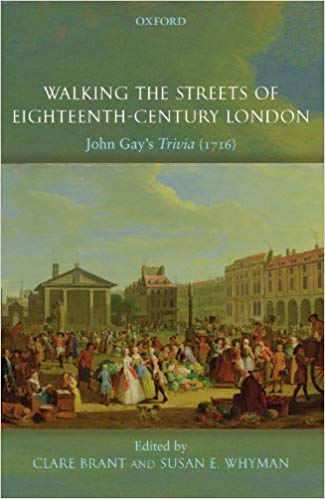
Walking the Streets of Eighteenth-Century London
Pat Rogers, University of South Florida,
By far the best teaching tool for Trivia … Pioneering essays pull the reader into the heart of the poem by providing parallel modes of understanding. They often manage to open up a given passage by applying in turn various explanatory models, which serve in combination to illuminate Gay’s intentions and achievements in a way never previously attempted. It is a method which opens many possibilities for a fresh way of understanding literature of the past. Walking the Streets of Eighteenth-Century London makes a very welcome addition to the essential reading on Gay and figures among the very best investigations of the Augustan satirists in recent decades.
Henry Power, Times Literary Supplement, November 23, 2009.
There is much to enjoy in this volume. The text of the poem itself is a sound one, and the commentary, far fuller than anything currently available, will be useful.
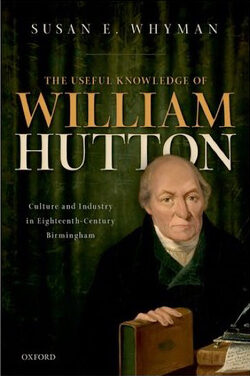
The Useful Knowledge of William Hutton
Christopher Ferguson, Review, Journal of British Studies, vol. 59:1 (2020), 169-70.
Whyman makes a strong argument for the importance of local culture and individual agency in facilitating British industrialization, contending that it was people like Hutton and towns like Birmingham that made industrialization possible …. Her work effectively reverses the assumptions guiding many social and micro-histories that focus on identifying representative past ideas, values, and experiences.
Peter M Jones English Historical Review, vol. 135:576 (2020), 1332-34.
Having thoroughly researched the book trade …She makes a number of trenchant points about the extent and nature of urban literacy.
Carolyn Steedman, Social History, vol. 45 (2020), 246-51
Whyman found extraordinary documents in the case of William Hutton … brilliantly retrieved inventories of Hutton’s shop and home.